Vines, Briars and Fence Lines: Keeping Field Edges and Access Paths Usable
Small, regular maintenance beats a big rescue job. Here's how to keep fence lines, field edges and access paths from closing in.
October 16, 2026 · 4 min read
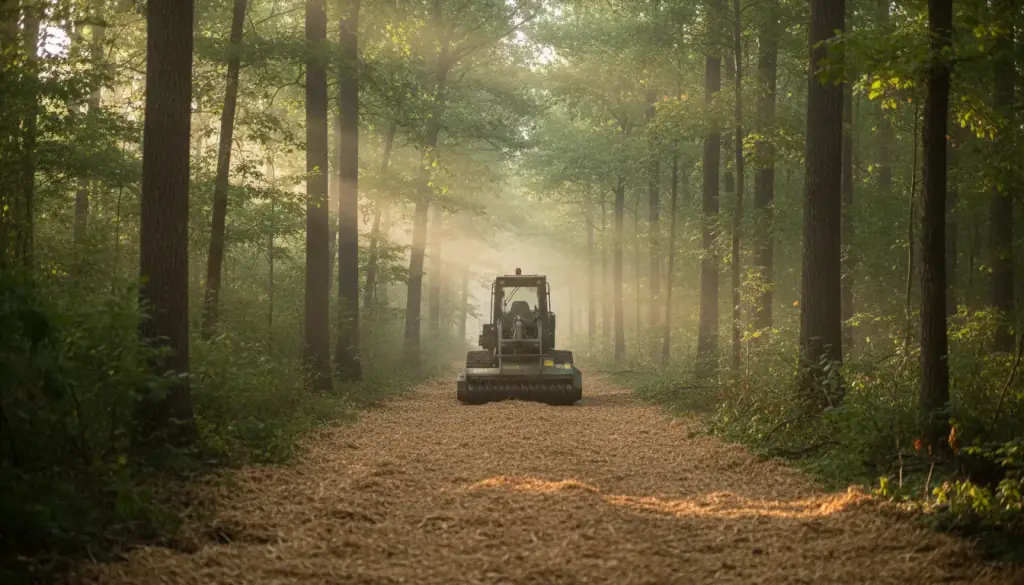
Walk any fence line in Middle Tennessee in midsummer and you'll see the same story. Vines climbing the wire. Briars leaning into the gap where the gate swings. A strip of brush where the mower can't reach, getting thicker every year. None of it feels urgent in any single week, and then one day you can't get a tractor down the edge of your own field.
Field edges, fence lines and access paths are where land goes wild first, because they're the places that don't get mowed or grazed like the open middle. The good news is they're also the easiest places to keep under control with regular, modest attention.
Why edges and fence lines go first
An edge is where open ground meets woods, and that's prime real estate for fast-growing plants. Seed arrives from the trees, birds perch on the fence and drop more, and the soil along a fence line is often undisturbed. Add sun from the open side and you've got ideal conditions for briars, vines and invasive shrubs.
A fence line also holds the plants up. Vines use the wire the way they'd use a trellis, and woody seedlings that sprout against a post can grow into the fence itself. Left alone, trees can push wire out of line, and the weight of vines can pull a fence down in a storm.
What makes briars and vines hard to deal with
Briars are tough for a simple reason: they fight back. Thorny canes scratch skin, snag clothing and tear at equipment. Many briars also spread by sending out runners or root shoots, so one patch can slowly become a whole thicket. Some types, such as greenbrier, have tough underground roots that make them very persistent.
Vines climb whatever they can reach, including the trees you care about. Wild grape, Virginia creeper and others can crowd out the canopy and add weight to limbs. And if you have poison ivy along the edge, take care when you cut. The oils can stay on tools, gloves and clothing, so wash up properly after the work.
The key point with all of them is that smaller is easier. A young patch of briars is a quick job. A patch that has had five seasons to establish is a different project entirely.
Access paths are the unglamorous backbone of a property. The lane to the back pasture, the driveway edge, the route a tractor or truck takes to a feed spot or hunting stand. When brush closes in, you end up driving through it, which damages your equipment, or abandoning the route altogether.
Think of access paths as having a width and a height. Cut brush back far enough on the sides that nothing scrapes your vehicle, and take low limbs and vines up out of the way as well. It's the overhead growth that people often forget until a branch catches a windshield or a mirror.
A routine that actually works
You don't need an elaborate schedule. What helps is a rhythm you'll keep up. Many landowners find that a pass in late spring, when growth is racing, and another in late summer or early fall keeps edges from getting out of control. Walk the fence line a couple of times a year even when you aren't cutting, and note what's coming.
- Cut vines at the base before they climb, and let the ones in trees die back.
- Keep a clear strip along both sides of the fence so growth doesn't lean on the wire.
- Remove woody seedlings while they're small, before they push on posts or wire.
- Trim back gate areas and corners where brush closes in first.
- Check low spots where water runs, since brush and debris collect there.
If you have a bigger problem on your hands, such as honeysuckle spreading along the whole boundary, that's worth tackling as its own job. For any questions about chemical control on fence lines, talk to a licensed applicator or the local UT Extension office.
When to bring in help
Plenty of owners handle routine edge work themselves. The point where it makes sense to call someone is when the growth is thicker than your equipment can handle, when you've fallen behind, or when the acreage is simply more than you've got time for. A crew with the right machines can cut back a season's worth of growth in far less time, and then you can pick it up from there.
That kind of work is exactly what our Basic Land & Brush Services cover: light brush cutting, vine removal, grass control and small-scale cleanup to keep field edges, fence lines, driveways, access paths and maintained acreage accessible, manageable and safe. Volunteer Land & Brush is locally veteran-owned and serves Middle Tennessee. Give us a call at (615) 478-7628 and we'll talk about what your edges need.
Volunteer Land & Brush LLC, (615) 478-7628
Call (615) 478-7628More articles
How to Get Rid of Honeysuckle on Your Property
Honeysuckle is beatable, but not in a single pass. Here's how it spreads and how to clear it while keeping the trees you care about.
How to Clear Overgrown Land Without Damaging the Trees You Want
The goal isn't a bare lot. It's usable land with the shade trees, hardwoods and fence-line giants still standing.