How to Get Rid of Honeysuckle on Your Property
Honeysuckle is beatable, but not in a single pass. Here's how it spreads and how to clear it while keeping the trees you care about.
October 16, 2026 · 4 min read
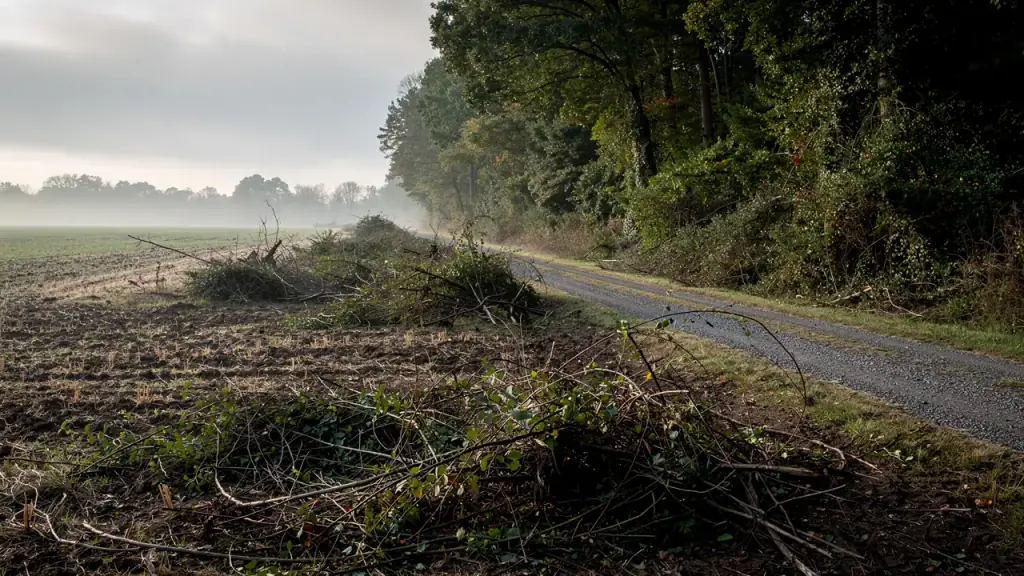
If you own wooded acreage or a field edge in Middle Tennessee, you've probably seen it: a tangle of leggy shrubs that leaf out early in spring and hang onto their green leaves long after everything else has dropped. That's bush honeysuckle, and it's one of the most common questions landowners ask about. How do you get rid of it, and how do you do it without wrecking the woods around it?
The short version is that honeysuckle is beatable, but not in one pass, and not by wishing it away. Here's how it behaves and what a sensible plan looks like.
Why honeysuckle takes over
Bush honeysuckle is an invasive shrub, not a native one. It leafs out earlier than most native plants and keeps its leaves later into fall, which gives it a much longer growing season than the plants living underneath it. Over a few seasons it shades out wildflowers, tree seedlings and young hardwoods, and the woods slowly lose the next generation of oaks and hickories.
Birds eat the berries and spread the seed along fence lines, creek banks and field edges, so a few shrubs near a boundary can turn into a thicket across the whole property. Once the shrubs are established they also sprout back from the base when cut, which is why a quick trim in July can look great in August and disappointing by next summer.
Why cutting it once is never the whole answer
Honeysuckle regrows from the root crown. Cut a mature shrub off at the ground and you'll often get a cluster of fresh shoots where there used to be one stem. That doesn't mean cutting is pointless. It means the plan has to account for regrowth from day one.
In practice a good approach has three parts. First, take the heavy growth down so you can see the ground and reach the stumps. Second, deal with the stumps and root crowns so the shrub doesn't simply resprout. Third, come back and follow up on whatever does return. Mechanical work such as brush cutting or forestry mulching handles the first part efficiently. The second and third parts are where patience pays off.
A word on chemicals. Some landowners treat cut stumps or regrowth with herbicide, and that's a legitimate tool against invasives. But products, mixes and timing matter, and mistakes can hurt the trees you're trying to protect. For anything involving chemicals, talk to a licensed applicator or your local UT Extension office. A blog post is no place to hand out a recipe.
Clearing honeysuckle without losing your good trees
The reason many landowners hesitate is that honeysuckle usually grows right underneath the trees they want to keep. Heavy equipment swung around carelessly can scar trunks and compact roots. That's where selective clearing earns its keep. The operator works around the trees you've marked as keepers, and the honeysuckle comes out from between them, without unnecessary tree removal.
Before any work starts, walk the property and decide which trees stay. Mature oaks, hickories, walnuts and any specimen tree you love are obvious keepers. Be honest about the rest, too. Not every scrubby cedar or box elder deserves to stay just because it's standing there, but that call is yours, and it's easier to make with tape on the trunks than in the middle of a job.
Honeysuckle is easy to spot in late fall and early winter because it's often still green when the woods around it have gone bare. That makes it a great time to see exactly where it is and how far it has spread. Plenty of landowners walk their land in that window with a roll of flagging tape and mark the thickest patches.
A few things are worth settling before you pick up the phone:
- Which trees are keepers, marked clearly with tape.
- Where the worst patches are, and where it's only just getting started.
- Whether you want the area left open, replanted, or allowed to come back to native growth.
- Where equipment can get in, and whether there are creeks, gates or soft ground to work around.
Expect to see some regrowth the first season or two. That's normal, not a failed job, and it's why a follow-up pass matters. Spots that were solid honeysuckle usually deserve a second look, and areas that were cleared and then left alone will tell you pretty quickly where the roots were strongest.
Which service fits your honeysuckle
If the honeysuckle is mostly along field edges, fence lines and open ground, our Basic Land & Brush Services cover brush cutting, vine removal and control of invasive plants like honeysuckle. If it has moved into the woods and you want a thicker stand cleared while the trees stay, Standard Land Clearing & Trail Work is the better fit. Where heavy honeysuckle covers a larger area and needs detailed planning and extended machine time, that's what Premium Land Clearing Solutions are for.
Not sure which one you need? Call Volunteer Land & Brush at (615) 478-7628 and tell us what you're looking at. We're a locally veteran-owned crew serving Middle Tennessee, and we're happy to talk it through.
Volunteer Land & Brush LLC, (615) 478-7628
Call (615) 478-7628More articles
How to Clear Overgrown Land Without Damaging the Trees You Want
The goal isn't a bare lot. It's usable land with the shade trees, hardwoods and fence-line giants still standing.
Cutting Walking and ATV Trails Through Woods and Heavy Brush
A good trail is planned on foot before any machine moves. Here's how to lay one out for walking, ATVs or hunting access.