How to Clear Overgrown Land Without Damaging the Trees You Want
The goal isn't a bare lot. It's usable land with the shade trees, hardwoods and fence-line giants still standing.
October 16, 2026 · 3 min read
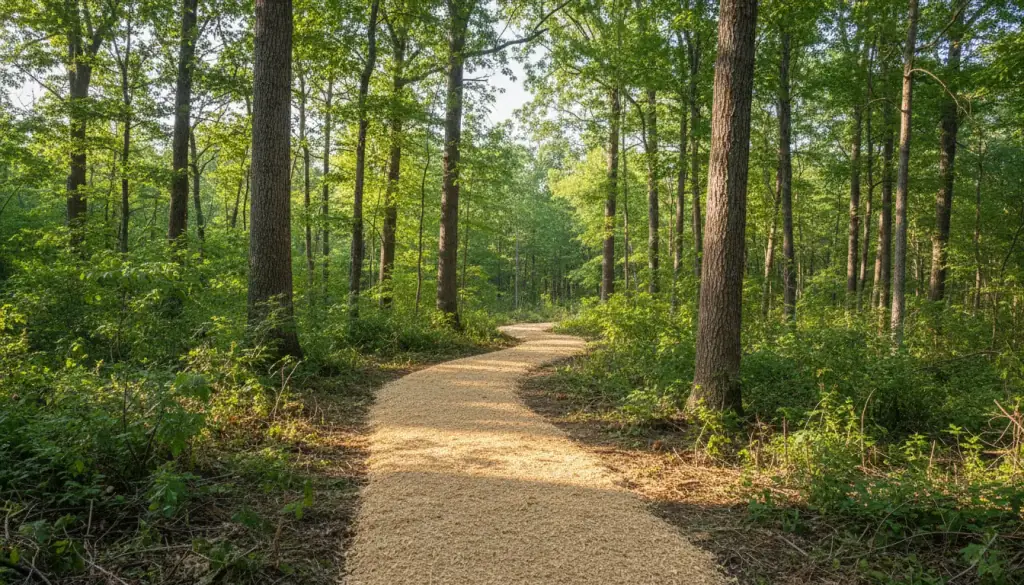
Most people who call about overgrown land aren't asking for a bulldozed lot. They want the brush, vines and junk growth gone so they can see their property again, and they want the big oak by the creek and the hickories along the ridge to still be there when the work is finished. It's a fair thing to ask for, and it's exactly what selective clearing is built around.
Here's how that works in practice, and what you can do to make sure your keepers come through the job in good shape.
Decide what stays before anyone starts
The most useful thing you can do is walk the land and make decisions. Tie flagging tape around every tree you want to keep. Be generous with the tape on the first pass, then you can pull some back later. Big hardwoods, nut-bearing trees, trees that shade a house or a pond, and anything with sentimental value all belong on the keeper list.
Then think about the middle category. Young hardwoods growing up through a thicket are often worth saving because they're the future of the woods. Fast-growing, short-lived trees crowding them might not be. If you're not sure which is which, ask. A good operator will look at what's standing and tell you honestly what they'd keep if it were their land.
How trees actually get hurt during clearing
Trees rarely get damaged by the brush work itself. They get damaged by a few predictable things. Trunks get scraped or gouged when equipment swings too close. Roots get compacted or torn when heavy machines run repeatedly over the same ground under a tree's canopy. Brush gets piled up against trunks and left there. And on slopes, bare soil can wash away around roots after a hard rain.
Every one of those is avoidable with a little planning. That means working at a careful pace near the keepers, leaving a buffer of undisturbed ground around them, hand cutting in tight spots where a machine would be too clumsy, and keeping debris away from trunks.
Clearing from the outside in, or from the keepers outward, gives the operator a clear picture of where everything is before the thick stuff comes down. Vines are another good example. Vines climbing a tree you want to keep are best cut at the base and allowed to die back rather than ripped off the trunk, which can tear bark and limbs along with them.
There's also the question of how much to take out at once. A tree that has grown up inside a dense stand has adapted to being sheltered. Open everything up around it all at once and it suddenly faces full sun and wind it never dealt with before. On some properties it makes sense to thin in stages and leave a few helper trees standing for a season rather than clear right down to bare ground.
What to ask before you hire anyone
Clearing is a lot of heavy machinery working around living things, so a few direct questions are fair:
- How will you work around the trees I've marked?
- What will you do with the brush and cut material?
- How will you handle slopes, creeks and wet ground?
- Will you walk the property with me before starting so we agree on what stays?
Straight answers to those tell you a lot. Vague answers tell you more.
One more point. If a tree near your house or driveway looks dead, leaning or structurally questionable, that's a different conversation. For hazard trees, call a certified arborist and get a professional opinion before deciding anything.
Where we fit in
Volunteer Land & Brush is a locally veteran-owned crew serving Middle Tennessee, and our approach is built on selective clearing and responsible land management: a practical way to open up your property without unnecessary tree removal. We care about the terrain, and we'd rather spend an extra few minutes working carefully around a good tree than cut corners.
For moderate overgrowth where you want thicker brush and honeysuckle cleared but the character of the land kept intact, our Standard Land Clearing & Trail Work tier is the usual starting point. Call (615) 478-7628, tell us what you want to keep, and we'll go from there.
Volunteer Land & Brush LLC, (615) 478-7628
Call (615) 478-7628More articles
How to Get Rid of Honeysuckle on Your Property
Honeysuckle is beatable, but not in a single pass. Here's how it spreads and how to clear it while keeping the trees you care about.
Cutting Walking and ATV Trails Through Woods and Heavy Brush
A good trail is planned on foot before any machine moves. Here's how to lay one out for walking, ATVs or hunting access.