How to Reclaim Land That Has Been Overgrown for Years
Overgrown doesn't mean ruined. Here's what bringing neglected acreage back looks like, and how to plan it around what you want the land to do.
October 16, 2026 · 4 min read
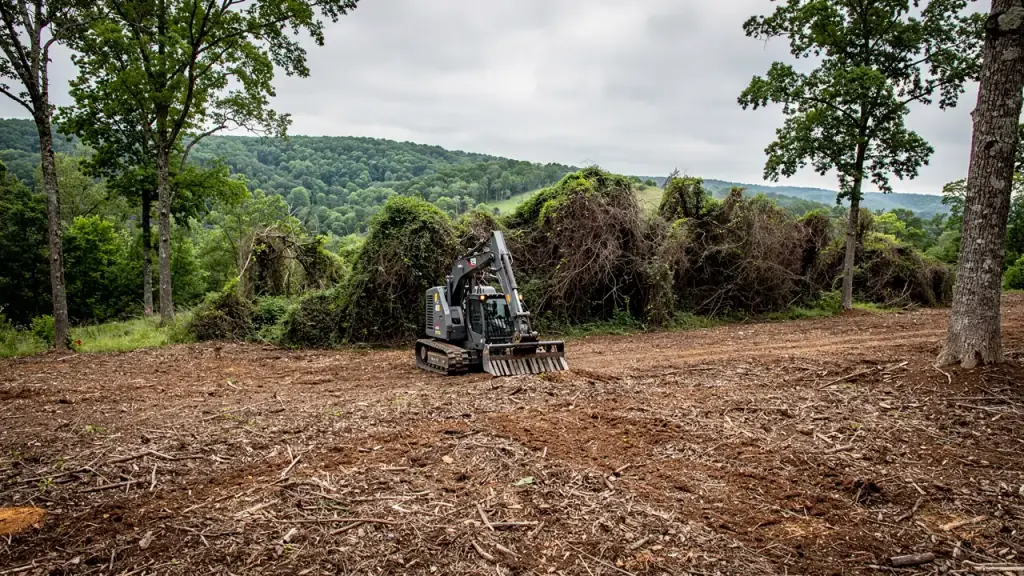
Almost every landowner in Middle Tennessee knows the feeling. A field you used to mow has turned into a wall of cedar, honeysuckle and briars. The old fence line vanished into the trees. You inherited a few acres, or bought a place that sat empty for a decade, and you can't even tell what you own from the road.
The good news is that land that has been overgrown for years can almost always be brought back. The less good news is that it's a bigger job than a weekend with a brush cutter, and it goes better with a plan.
Start with what you want the land to do
Before talking about equipment, talk about the goal. Reclaiming land isn't the same job for every owner. Some people want open pasture again. Some want a clean building site or lot preparation for a future home, barn or driveway. Others want hunting land with open lanes and good cover left intact, or recreational ground with trails and a few open meadows.
Each of those leads to a different plan. Pasture means taking most of the woody growth out and leaving the best shade trees. A hunting property might deliberately keep thick patches for cover while opening travel routes. A building site needs a clean footprint and access. Deciding up front keeps you from paying to clear things you'll wish you had left, or leaving things you'll end up clearing later.
What reclamation actually involves
Land that has gone wild for years usually has several layers of growth stacked on each other. Vines and briars cover the ground and climb the trees. Dense brush and invasive shrubs like honeysuckle form a thicket underneath. Young cedar and other fast-growing trees fill in every gap, and somewhere behind all of it are the mature hardwoods you want to keep.
Working through that takes time and the right machinery, because the thickest growth can't be handled with hand tools. It also takes planning, since the order of work matters. Access comes first, so the equipment can get in. Then the heaviest growth comes down, and the remaining stumps and root crowns are dealt with so the ground doesn't simply regrow what was removed.
Forestry mulching and other approaches
One method many landowners ask about is forestry mulching, which grinds brush and small trees right where they stand and leaves the material on the ground as a layer of mulch. There's no big pile to haul away and no stack of brush to deal with afterward. The mulch layer can help hold soil in place and suppress regrowth in the short term. Volunteer Land & Brush lists forestry mulching among its services alongside brush clearing, trail cutting and lot preparation.
Mulching isn't the answer to every situation. In very dense areas the mulch can build up deep, and some owners would rather have the ground cleared and the material taken off. Piling and removing is another route, and it can make more sense near buildings or on ground you plan to grade. The right choice depends on the terrain, how much material there is and what you plan to do next.
Here's something that surprises people. Clearing the land is not the finish line. Overgrown ground is full of seeds and root systems waiting for light, and once the canopy of brush is gone they respond fast. Honeysuckle, briars and cedar seedlings all come back, usually thinner but very much alive.
That's why reclamation works best as a starting point with a maintenance plan behind it. Once the heavy work is done, a lighter pass now and then keeps things from sliding back. If you want the cleared area to become pasture, or you plan to seed a particular groundcover, talk to your local UT Extension office about what suits your soil. And if herbicide is part of your plan, that should go through a licensed applicator.
A few things make the conversation much easier when you call:
- A rough sense of how many acres you're dealing with and where the boundaries are.
- Your goal for the land: pasture, hunting, a building site, trails or just a tidy property.
- The trees and features you want protected.
- How equipment can get onto the property.
Where Premium Land Clearing Solutions come in
Large or severely overgrown projects are what our Premium Land Clearing Solutions are built for: significant land reclamation, dense brush and vine removal, heavy honeysuckle growth and customized clearing based on your long-term property goals. These jobs call for extended machine time, detailed planning and precise execution, and that's how we approach them. We work with respect for the terrain and clear communication from the first walk-through.
Volunteer Land & Brush is a locally veteran-owned crew serving Middle Tennessee. If you've got acreage that's been getting away from you, call (615) 478-7628 and tell us about it.
Volunteer Land & Brush LLC, (615) 478-7628
Call (615) 478-7628More articles
How to Get Rid of Honeysuckle on Your Property
Honeysuckle is beatable, but not in a single pass. Here's how it spreads and how to clear it while keeping the trees you care about.
How to Clear Overgrown Land Without Damaging the Trees You Want
The goal isn't a bare lot. It's usable land with the shade trees, hardwoods and fence-line giants still standing.